Financial Literacy Assessments, Tests, & Program Experience Resources

Top-quality financial education programming is crafted to produce observable improvements in people’s personal financial realities. To show real impact, programs must assess more than just content knowledge – they must evaluate how learning affects attitudes, behaviors, systems, and outcomes in the real world. Financial education tests offer educators and community groups in the Caribbean structured ways to measure participant progress and the true impact of financial literacy programming.

Providing a strong learner experience is equally essential. To achieve success, programs need to be thoughtfully designed, professionally delivered, and accompanied with follow-up to reinforce the learning and create behavior change that lasts. The NFEC’s customizable suite of resources includes preparation checklists, facilitation tools, outcome measures, and reinforcement tools to help educators across the Caribbean region provide financial education consistently and for maximum impact.

Financial Literacy Assessments & Tests

The end goal of an effective financial education program is to have real-world results and learner benefits that can be quantified. Translating your instruction into such lasting, measurable impact requires tracking progress across multiple areas. These areas include testing not only participants’ knowledge, but also their feelings, attitudes, behavior, and actions.

The NFEC has developed an in-depth bank of assessments and report templates that empower you to demonstrate real program impact – not just what participants recall. These tools are customizable, compliance-ready, and aligned with true financial competencies. Ten evaluation measures encompassing hundreds of individual questions can be tailored to capture learner sentiment, behaviors, systems, and long-term outcomes – allowing you to prove your results. These evaluation resources include measures across several key areas:

Behaviors

Observable actions that support their journey to becoming effective stewards of their finances.

Systems

The routines, tools, or structures they’ve developed to support their personal finance management.

Stage of Change

Their readiness and willingness to apply what they’ve learned.

Sentiment

Their feelings, confidence, and mindset toward applying what they learned in the lessons.

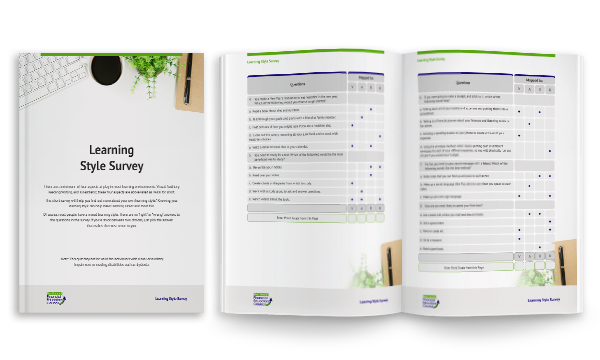
Learning Style Survey

Measure how learners prefer to receive, process, and engage with information.

Interest

Their level of engagement and motivation to learn the subject matter.

Content Knowledge

What learners understand about teaching personal finance topics. (Available with curriculum only.)

Support

The networks, resources, or people they access to help them succeed.

Actions

Specific steps learners take as a direct result of the training.

Outcomes

Real-world impact and measurable results stemming from their learning experience.

Case Study Report Template

A professional tool to document your program’s success and showcase outcomes to funders, employers, and community partners

Certification Tour, Graduate Features, & Bonus Presentation Resources

  • CFEI® Tour: See how the program works and explore the journey step by step.

  • Graduate Features: Hear real stories from instructors making an impact.

  • Bonus Resources: Get exclusive teaching tools to elevate your financial education programs.

This is more than a course – it’s your opportunity to join a global network of educators committed to empowering individuals and communities with practical, life-changing financial skills.

By accessing the NFEC’s material, you agree to comply with the full terms.

Join Over 5,000 Enrolled CFEI® Champions Providing Others Qualified Financial Education

Participant Experience Resources

To present a top-quality financial education program, you need much more than good content. You need thoughtful design, professional delivery, and long-term follow-up that transforms learning into lasting change in behavior. We have put together a comprehensive suite of resources that help you deliver such a world-class learning experience before, during, and after the program takes place. This toolkit reduces your preparation time, standardizes instructor and venue quality, and ensures that every teaching endeavor is professionally presented to achieve maximum learning outcomes.

Every resource may be customized to reflect your audience and brand – from registration materials and facilitator checklists through measurement systems and continuing education options – so you can give learners the most professional experience possible.

This complete package frees you to focus on the top priority: offering streamlined learning experiences that empower participants to build knowledge, positive behavior change, and lasting financial wellness.
Pre-programming

Preparation checklists, pre-participant surveys, registration workflows, and email templates to build anticipation and set the tone.

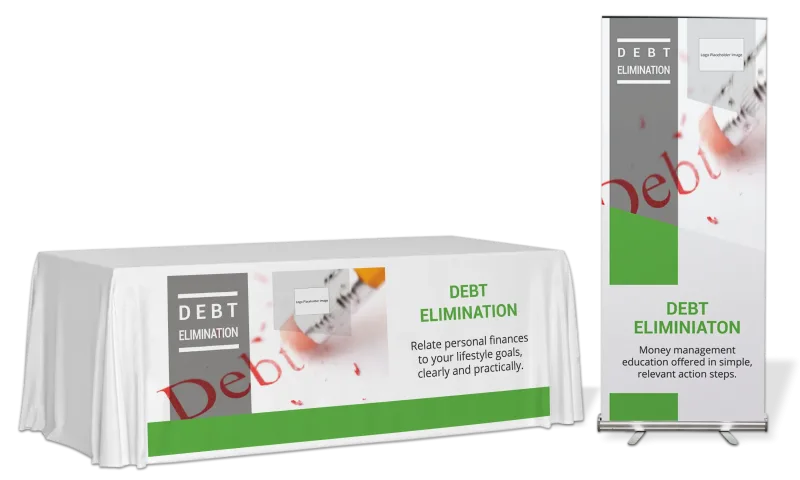
Implementation

Professional banners, event handouts, measurement tools, and facilitation checklists to ensure smooth, impactful delivery.

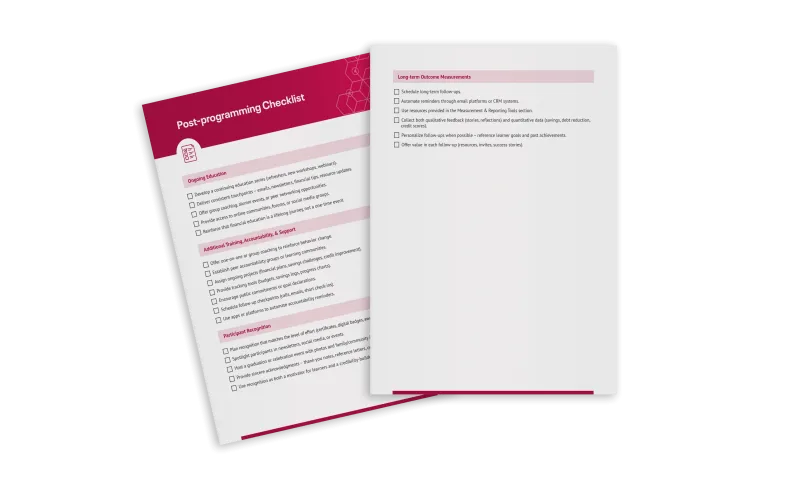
Post-programming

Recognition templates, outcome measurement systems, and ongoing education materials to reinforce learning and strengthen long-term outcomes.

Certification Tour, Graduate Features, & Bonus Presentation Resources

  • CFEI® Tour: See how the program works and explore the journey step by step.

  • Graduate Features: Hear real stories from instructors making an impact.

  • Bonus Resources: Get exclusive teaching tools to elevate your financial education programs.

This is more than a course – it’s your opportunity to join a global network of educators committed to empowering individuals and communities with practical, life-changing financial skills.

By accessing the NFEC’s material, you agree to comply with the full terms.

Join Over 5,000 Enrolled CFEI® Champions Providing Others Qualified Financial Education

Eastern Caribbean (OECS / ECCU)

Eastern Caribbean Central Bank (ECCB), Financial Literacy and Financial Inclusion (FLFI) Survey, 2023

Eastern Caribbean Currency Union (Anguilla, Antigua & Barbuda, Dominica, Grenada, Montserrat, St. Kitts & Nevis, Saint Lucia, St. Vincent & the Grenadines)
Key results:

  • Overall financial literacy score 12.2 out of 20 (61%).
  • Financial knowledge score 4.4 / 7 (≈62%).
  • Financial behaviour score 6 / 9 (≈66%).
  • Financial attitudes score 1.9 / 4 (≈48%).
  • Only about 9% of adults passed the minimum target across all components.

Eastern Caribbean (Expanded Report)

ECCB Financial Literacy and Financial Inclusion Survey – Volume I, 2024

Eastern Caribbean Currency Union

Key results:

  • Survey sample: 7,037 adults across ECCU countries.
  • Measures financial knowledge, behavior, attitudes, and access to financial services.
  • Found moderate financial knowledge but weak long-term planning and savings behavior.

Trinidad & Tobago

Central Bank of Trinidad and Tobago – National Financial Literacy Survey, 2022

Trinidad & Tobago

Key focus areas:

  • Financial knowledge
  • Financial behavior
  • Financial attitudes
  • Financial inclusion and use of financial services

Regional Caribbean Study

Caribbean Development Bank – Access to Finance Study (Financial Capability Indicators), 2019

Caribbean region (multiple borrowing member countries)

Key findings:

  • Many households lack understanding of credit terms and interest rates.
  • Limited long-term financial planning among lower-income populations.

Jamaica

Financial Services Commission – National Financial Literacy Baseline Survey, 2012

Jamaica

Key findings:

  • Many respondents lacked understanding of inflation, compound interest, and credit terms.
  • Results helped shape Jamaica’s National Financial Literacy Strategy.

Jamaica (Youth Financial Literacy)

Bank of Jamaica – Baseline Financial Literacy Survey of Youth, 2022

Jamaica

Purpose: National survey of financial wellbeing, confidence, inclusion, resilience, and money management among adults. While broader than a pure literacy test, it includes measures of financial confidence and capability.

Key findings:

  • Measures financial knowledge, attitudes, and behaviors among youth ages 12–19.
  • Results showed significant gaps in budgeting and savings knowledge among students.

Global Study Including Caribbean

Standard & Poor’s Global Financial Literacy Survey (World Bank collaboration), 2015

Includes Jamaica and several Caribbean economies

Key results:

  • 33% of Jamaican adults demonstrated basic financial literacy.
  • Global benchmark average: 33% literacy rate worldwide.

OECD Global Benchmark (Regional Comparison)

OECD/INFE International Survey of Adult Financial Literacy, 2023

Global study used by many Caribbean central banks for benchmarking

Key metrics measured:

  • Financial knowledge
  • Financial behavior
  • Financial attitudes
  • Financial well-being